
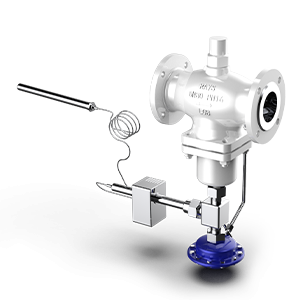
SO-13700/FT06、SO-13710/FT06、SO-13700/FT17、SO-13710/FT17 Combined Self-operated Flow and Temperature Regulator
An energy-saving multi-combination control valve without external energy sources, used as a flow and temperature control device for non-corrosive liquids, gases and steam and other media with a maximum temperature of 200℃.
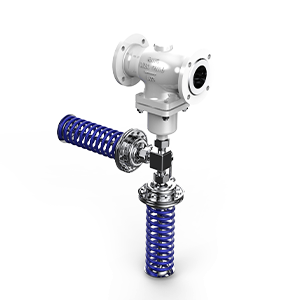
SO-133001/ZA3、SO-133101/ZA3 Combined Self-operated Pressure and Differential Pressure Regulator
An energy-saving multi-combination control valve without external energy sources, used for pressure and differential pressure control of non-corrosive liquids, gases and steam and other media with a maximum temperature of 350℃.
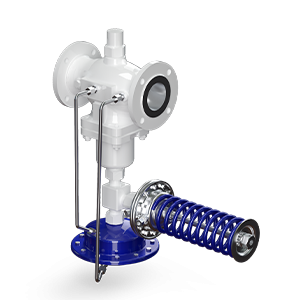
SO-137001/ZA3、SO-137101/ZA3 Combined Self-operated Flow and Pressure Regulator
An energy-saving multi-combination control valve without external energy sources, used for controlling the flow and pressure of non-corrosive water and other liquid media with a maximum temperature of 200℃
An energy-saving multi-combination control valve without external energy sources, used for flow and temperature control devices for non-corrosive liquids with a maximum temperature of 350℃, as well as pressure and differential pressure control devices, and flow and pressure control devices for liquids, gases and steam.
Does not require any external driving energy
Has pressure balancing function and high sensitivity
Does not require maintenance, with reliable performance
Low noise, smooth operation
Adopts modular design, with high levels of standardization, seriesization and generalization
Can be combined into various types of self-operated regulating valves through components
Material: WCB、CF8、CF8M
Nominal Size: DN15~250mm
Pressure Rate: PN1.6~4.0MPa
Voltage Regulating Range:0.02MPa,0.05MPa、 0.3~1.2MPa、0.1~0.6MPa、0.015~0.15MPa、 0.05~0.3MPa、0.01~0.07MPa、0.025~0.035MPa、0.8~1.6MPa
Temperature Range: ≤350℃
Operator: Self-pressurization type
Application range: It is applicable to the automatic control systems in industrial production processes such as water supply, petrochemical, heating and cooling, energy, papermaking, food, and steel, where there is no (or cannot be used) driving energy. It is particularly suitable for automatic control system devices in gas production and transportation or gas supply and transportation.