
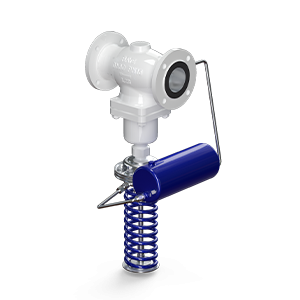
SO-23001、SO-23101、SO-23201 Self-operated Downstream Pressure Regulator
An energy-saving control valve without external energy supply, used for pressure control devices at the end of non-corrosive liquids, gases and steam with a temperature of ≤ 350℃ and other media.
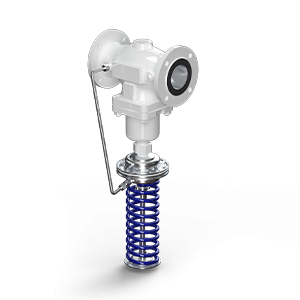
SO-23002、SO-23102、SO-23202 Self-operated Upstream Pressure Regulator
An energy-saving control valve without external energy sources is used for pressure control devices at the inlet of gases, liquids and steam with a temperature of ≤ 200℃ and other media.
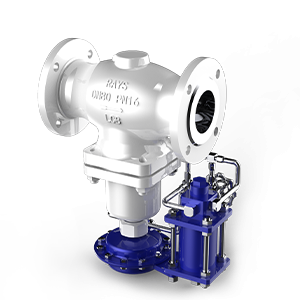
SO-23011、SO-23111、SO-23211 Self-operated Downstream Pressure Regulator with Pilot
An energy-saving control valve without external energy sources is used for pressure control devices at the inlet of gases, liquids and steam with a temperature of ≤ 200℃ and other media.
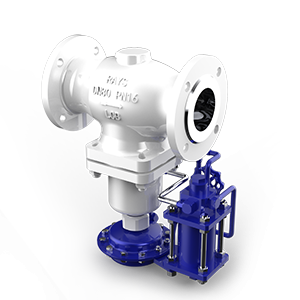
SO-23012、SO-23112、SO-23212 Self-operated Upstream Pressure Regulator with Pilot
An energy-saving control valve without external energy supply, used for pressure control devices at the valve inlet of non-corrosive liquids, gases and steam with a temperature of ≤ 300℃ and other media.
The self-regulating control valve is an energy-saving control device that does not require external driving energy. It relies on the pressure or temperature of the medium being regulated as its power source, automatically adjusting according to set values based on changes in the medium. This valve integrates multiple functions of detection and control into one unit, forming an independent instrument control system. The self-operated control valve adopts a standard modular design. Our products are characterized by: standardization, serialization, and generalization. This achieves a high level of these three aspects. The components of the self-operated pressure regulator and differential pressure regulator are interchangeable. If the control conditions change, the spring & diaphragm components can be easily replaced. The accuracy of the self-operated control valve surpasses that of similar products, and it also offers high stability. Diversified product series: self-operated pressure regulator, self-operated micro-pressure regulator, self-operated temperature regulator, self-operated flow regulator, self-operated nitrogen-sealing valve, and self-operated (combined) regulator...
● Modular Design: Product standardization, serialization, and generalization, with interchange.able components.
● Special Conditions: Based on practical engineering issues and to meet the differentiated needs ofcustomers, we provide highly personalized solutions. Our products are widelyapplicable in various industries such as: petroleum, chemical, pharmaceuti-cals, heating, and water conservancy. In particular, the self-operatednitrogen-sealing valve is at the forefront of industry technology for pressureregulation devices in storage tanks.
● Energy Saving: No external driving energy is required, the power source relies on the pressureor temperature of the regulated medium..
Material: WCB、CF8、CF8M
Nominal Size: DN15~DN350
Pressure Rate: PN1.6~4.0Mpa
Voltage Regulating Range:0.005~0.035Mpa、0.015~0.15Mpa、0.01~0.07Mpa、0.05-0.3Mpa、0.1~0.6Mpa、
0.3~1.2Mpa、 0.8-1.6Mpa
Temperature Range: ≤350℃
Operator: Self-venting type
Application range: It is applicable to the automatic control systems in industrial production processes such as water supply, petrochemical, heating and cooling, energy, papermaking, food processing, and steel manufacturing, where there is no (or cannot be used) driving energy. It is particularly suitable for the automatic control system devices in the gas production and transportation or gas supply and transportation.